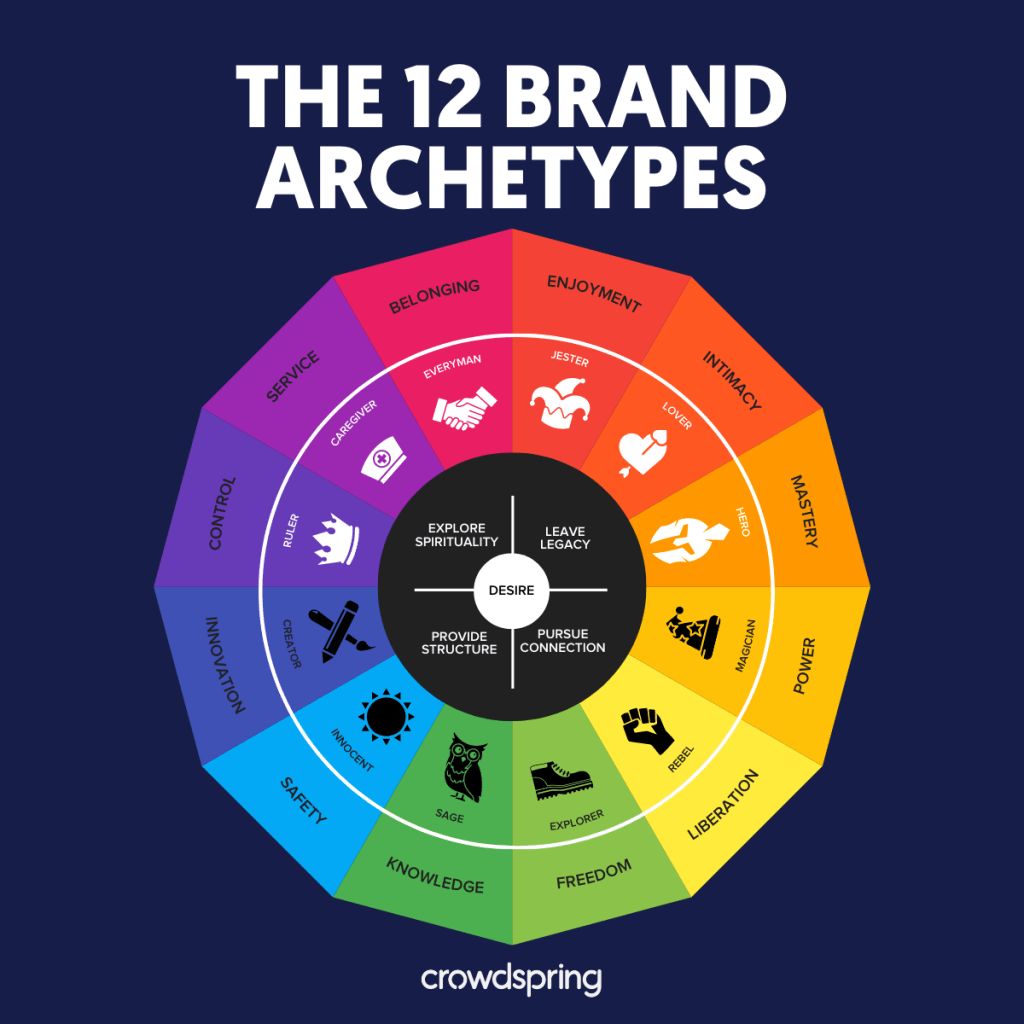
The realm of marketing and brand identity is both fascinating and intricate. One model offering an intriguing perspective in this realm is the Brand Archetypes proposed by Elizalde – Avalos. Rooted in Jungian psychology, this theory suggests that brands, akin to individuals, can be categorized into specific archetypes, each with its own characteristics and ways of connecting with the audience. In this article, we delve into these archetypes and explore examples of how brands have incorporated them into their strategies.
What is a Brand Archetype? Brand archetypes are universal models representing a set of values, attitudes, and behaviors that resonate deeply with consumers. Carl Jung, the Swiss psychiatrist, introduced the idea of archetypes in psychology, which has since been adapted in the marketing world by various theorists, including Elizalde – Avalos.
Brand Archetypes According to Elizalde – Avalos
- The Innocent The Innocent symbolizes optimism, simplicity, and trust. This brand archetype aims to delight customers by offering simple yet high-quality products or services.
Example: Dove. With its focus on natural beauty and self-acceptance, Dove embodies this archetype through positive and uplifting advertising campaigns.
- The Sage The Sage seeks truth and knowledge. Brands embodying this archetype typically focus on education, guidance, and information.
Example: Google. As a search engine, Google personifies the Sage, providing answers and knowledge to users’ queries.
- The Explorer The Explorer is adventurous, always seeking new experiences and freedom. Brands of this archetype promise adventure and discovery through their products.
Example: GoPro. With cameras designed for extreme situations and adventures, GoPro is a prime example of an Explorer brand.
- The Ruler The Ruler is associated with power, responsibility, and control. Brands under this archetype are often perceived as leaders in their field.
Example: Mercedes-Benz. With its emphasis on superior quality and leadership in automotive engineering, Mercedes embodies the Ruler archetype.
- The Creator The Creator is innovative and values authenticity and creativity. Creator brands aim to transform and revolutionize with their products.
Example: Apple. Known for its innovation and design in technology, Apple is a clear example of the Creator archetype.
- The Caregiver The Caregiver is compassionate and protective. This archetype focuses on helping and caring for others.
Example: Johnson & Johnson. With products oriented towards family care and health, this brand reflects the qualities of the Caregiver.
- The Magician The Magician seeks to create something special and extraordinary, transforming ordinary reality into something wonderful.
Example: Disney. With its ability to turn tales into magical experiences, Disney personifies the Magician.
- The Hero The Hero is brave, striving for success and overcoming obstacles.
Example: Nike. Through its slogan “Just Do It,” Nike inspires its consumers to push their limits, like a true Hero.
- The Outlaw The Outlaw is rebellious and challenges the conventional. This archetype breaks norms and proposes new ways of thinking.
Example: Harley-Davidson. With its rebellious image and spirit of freedom, Harley-Davidson embodies the Outlaw.
- The Lover The Lover seeks to create emotional connections, highlighting passion, pleasure, and intimacy.
Example: Victoria’s Secret. This brand, focused on sensuality and intimate connection, reflects the Lover archetype.
- The Jester The Jester is joyful and seeks to enjoy life. This archetype is common in brands promoting fun and humor.
Example: Old Spice. With its humorous and eccentric advertisements, Old Spice exemplifies the Jester.
- The Everyman This archetype values honesty, simplicity, and authenticity. Brands of this type focus on connecting with people’s everyday lives.
Example: Ikea. Ikea caters to the “everyman,” offering practical and accessible home solutions.
Brand archetypes not only help companies define their identity but also enable consumers to identify with brands on a deeper, more personal level. By understanding these archetypes and how they apply in different brand strategies, companies can create a more meaningful connection with their target audience.
The Elizalde – Avalos Model offers a valuable tool for understanding and applying these archetypes in the marketing world. By identifying a brand’s archetype, companies can develop more effective and resonant marketing strategies that reflect their true essence and values.

