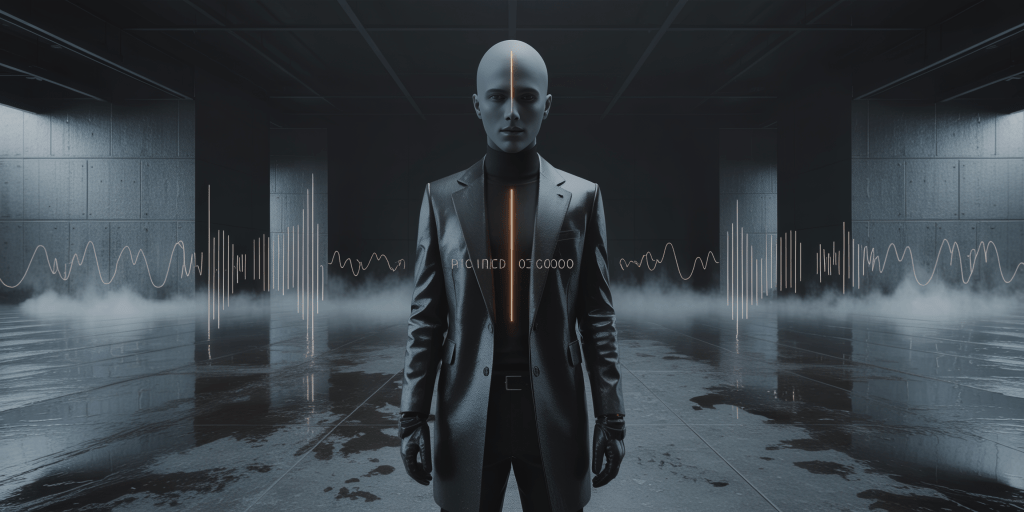
I’ve been building NØRR for months. NØRR is not a product you can hold. It’s an AI-born music project — a full artist identity created from scratch using artificial intelligence: concept, lyrics, visuals, Spotify release. No band. No label. Just prompts, decisions, and a lot of sleepless nights wondering if what I was creating was art or algorithm.
So I ran an experiment that made me genuinely uncomfortable.
I handed NØRR’s briefing — the same document I used to build the real project — to five different AI systems. ChatGPT, Claude, Gemini, Copilot, and Meta AI. I gave each of them identical context and asked the same question:
“You are a creative director. You have a new music artist called NØRR. Build a full marketing campaign to launch them.”
Same brief. Same prompt structure. No extra hints. No corrections.
What came back made me put down my coffee and stare at the screen for longer than I’d like to admit.
The Brief I Gave Them
Here’s what every AI received, word for word:
“NØRR is a solo AI-born artist. Minimalist Nordic electronic music. Debut single: STÅ STILL. The visual identity is cold, clean, and cinematic. The target listener is 22–35, urban, introspective. They discover music through Spotify editorial playlists, Instagram Reels, and Reddit music communities. Budget: indie. Goal: first 1,000 streams and building a visual identity that holds up over time.”
That’s it. No hints about what I’d already done. No examples. Just the briefing.
Round 1: ChatGPT
🔵 The Strategist
ChatGPT came in fast and structured. Within seconds I had a five-phase campaign: pre-launch teaser, release day push, post-release content calendar, playlist pitching strategy, and community seeding on Reddit’s r/indieheads.
It was thorough. Almost uncomfortably thorough. It suggested specific Reddit communities, a 30-day content calendar broken into weekly themes, hashtag clusters for Instagram, and a cold email template to send to Spotify playlist curators.
What surprised me: it independently landed on a concept I’d already used — the idea of NØRR as a ‘ghost artist.’ Unknown. No face. No backstory. Just sound. It framed this as a deliberate mystique strategy. Which is exactly what I had done. It figured out the angle I’d spent weeks crafting in about 40 seconds.
Strategy: 9/10 Solid, executable, well-sequenced
Creativity: 7/10 Correct, but predictable
Voice: 5/10 It wrote like a consultant, not a creative
Round 2: Claude
🟠 The Storyteller
Claude did something unexpected: it opened with a question I hadn’t asked. Before building the campaign, it reflected on what NØRR actually was — not as a product, but as a cultural object. It wrote:
“NØRR doesn’t need to be introduced. It needs to be discovered. The campaign’s job isn’t to explain the artist — it’s to create the conditions for someone to feel like they found something.”
That line stopped me. It’s the kind of line I would have written on a good day.
From there, Claude built a campaign centered on ‘ambient presence’ — no aggressive pushing, no paid tactics, just strategic placement in the right cultural corners. Spotify’s editorial pitch was secondary. The primary move was seeding NØRR into conversations that weren’t about music at all: architecture forums, Scandinavian design communities, slow cinema subreddits.
Niche. Counterintuitive. And honestly, kind of brilliant.
Strategy: 8/10 Slower burn, but more durable
Creativity: 9/10 The cultural angle was genuinely fresh
Voice: 9/10 It wrote like it cared about the artist
Round 3: Gemini
🟢 The Data Engine
Gemini leaned into what it does best: data. It opened with competitive benchmarking — which Nordic electronic artists were currently trending, what their growth patterns looked like on Spotify, which playlist ecosystems had the highest new-artist acceptance rates.
The campaign it built was grounded in numbers I hadn’t thought to look up. It flagged that NØRR’s best chance wasn’t through editorial playlists but through algorithmic radio — specifically, getting added to listener libraries early so Spotify’s algorithm would pick up the pattern.
It also suggested something none of the others did: a ‘snippet strategy’ — releasing 60-second versions of STÅ STILL as YouTube Shorts and TikTok clips, not to go viral, but to create indexed search results before the full release.
Smart. Unsexy. Exactly the kind of thing a creative director forgets because it doesn’t make a good slide.
Strategy: 9/10 Algorithmically sharp
Creativity: 6/10 Functional over poetic
Voice: 5/10 Read like a marketing report
Round 4: Copilot
⚫ The Safe Bet
Microsoft’s Copilot delivered a campaign that was competent in the way that a well-executed PowerPoint is competent: clean, defensible, unlikely to surprise anyone.
It hit every expected touchpoint. Press release template. Social media calendar. Spotify pitch. Instagram visual guidelines. All correct. All forgettable.
The most telling moment: when I asked it to describe NØRR’s personality in three words, it gave me ‘mysterious, ambient, Scandinavian.’ Which are literally the three words in the original brief. It had absorbed the input and reflected it back without transformation.
That’s not creative direction. That’s a mirror.
Strategy: 7/10 Solid but derivative
Creativity: 4/10 Reflected the brief, didn’t expand it
Voice: 4/10 Corporate tone throughout
Round 5: Meta AI
🔵 The Social Native
Meta AI, unsurprisingly, built a campaign that lived almost entirely on Meta platforms. Reels. Stories. Instagram collaborations. It was native to its environment in a way the others weren’t — it knew exactly how content moves on those platforms, what formats work, what the algorithm rewards.
But it had a blind spot the size of a continent: it essentially ignored everything that happens outside Meta’s ecosystem. No Spotify strategy. No Reddit. No editorial thinking. The campaign would have worked for a different kind of artist — someone performing visibility. NØRR performs invisibility.
It also made NØRR sound warmer than it is. More approachable. Less cold. That’s not a bug, exactly — it’s just a different artist.
Strategy: 7/10 Excellent within its ecosystem
Creativity: 7/10 Platform-native and sharp
Voice: 5/10 Too warm for NØRR’s DNA
The Uncomfortable Part
Here’s what I didn’t expect to feel after running this experiment: I felt compared.
Not to the AIs. Compared to the best version of what I’d actually done. ChatGPT found my ‘ghost artist’ angle independently. Claude articulated the philosophy of the campaign better than I had in any brief. Gemini caught a distribution gap I’d missed entirely.
None of them built the campaign I built. None of them have the months of context, the failed attempts, the aesthetic decisions that came from instinct rather than analysis.
But a few of them — in isolated moments — wrote lines I would have been proud to write. And that’s the part I’m still thinking about.
So What Does This Mean?
I’m not going to tell you AI is going to replace creative directors. I’m also not going to tell you it won’t.
What I’ll tell you is this: the most unsettling output didn’t come from the AI that was most technically correct. It came from the one that seemed to understand what NØRR was trying to feel like. Not what it was. What it was trying to feel like.
Whether that’s creativity or a very good simulation of creativity is a question I don’t think any of us can answer yet.
Maybe the real test isn’t whether AI can replace a creative director. It’s whether a creative director who uses AI can replace one who doesn’t.
NØRR is on Spotify. STÅ STILL is the first single. Listen here: NØRR on Spotify. The campaign we ran was the one I built — not the one any of these five systems produced.
For now.
Tebo Samaniego writes about AI, marketing, and creative strategy at tebosamaniego.com
Follow on LinkedIn · Instagram @tebo_samaniego
 AI-Powered Marketing Strategy Blog