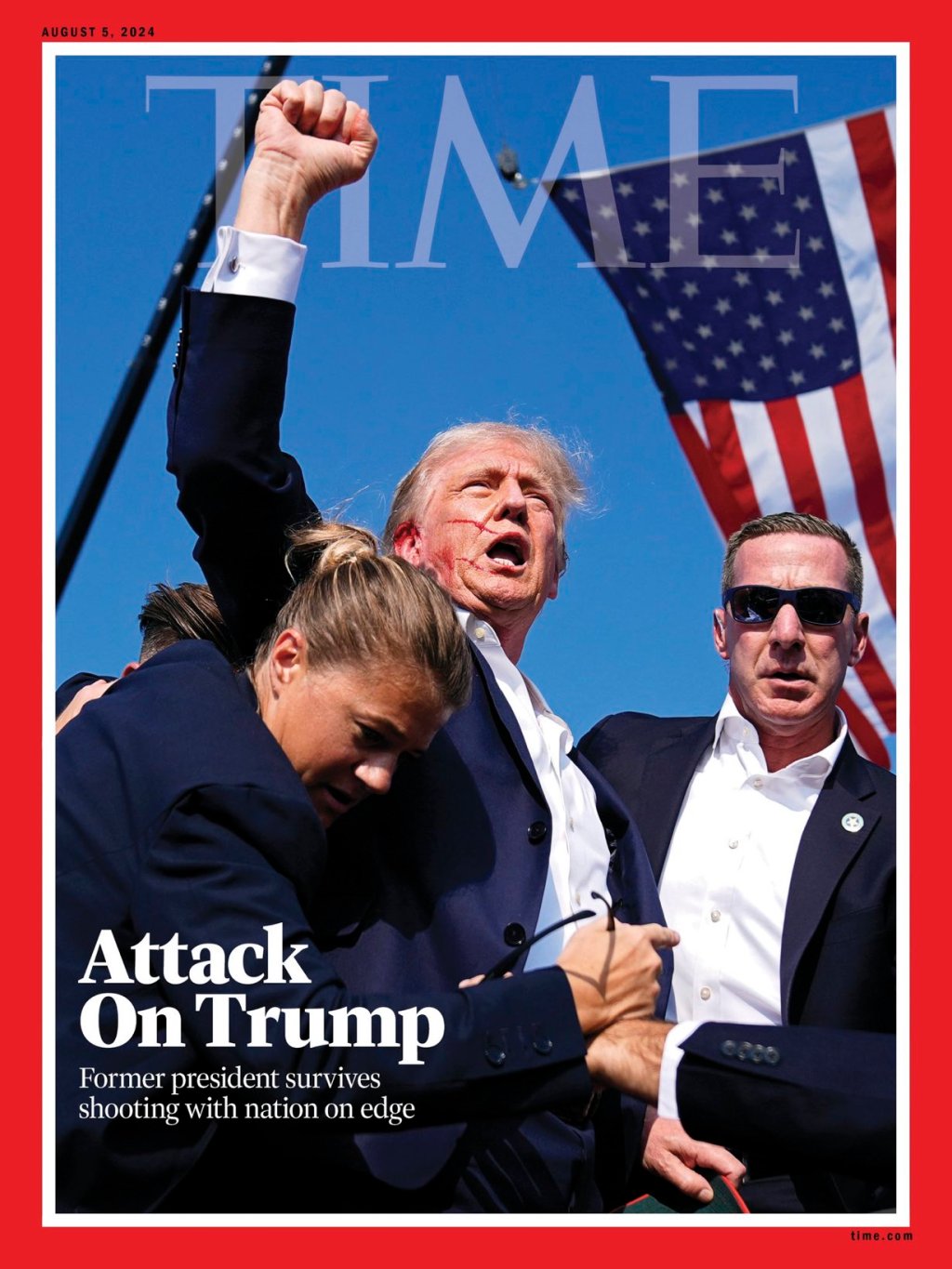
Semiotics, the study of signs and symbols and their use or interpretation, provides us with a powerful lens to understand how images communicate profound meanings. In this article, we will explore two iconic images: the photograph of the flag-raising at Iwo Jima during World War II and the recent Time magazine cover featuring Donald Trump raising his fist with the American flag in the background. Through a detailed analysis, we will reveal how both images, separated by decades, share common themes of power, patriotism, and resilience. Additionally, we will examine how the Time cover could favor Trump’s candidacy.
The Photograph of Iwo Jima
The photograph of the flag-raising at Iwo Jima, taken by Joe Rosenthal on February 23, 1945, is one of the most iconic images in American history. This photo shows six U.S. Marines raising their nation’s flag on Mount Suribachi during one of the fiercest battles in the Pacific. The image has been interpreted as a symbol of the bravery, sacrifice, and victory of the United States in times of war.
- Patriotism and Unity: The image of Iwo Jima embodies the spirit of unity and collaboration. The six soldiers working together to raise the flag symbolize the collective strength and patriotism that define a nation in times of crisis.
- Resilience and Sacrifice: The scene is laden with symbolism of resilience. The battle of Iwo Jima was one of the bloodiest, and the image captures not only a moment of triumph but also the necessary sacrifice to achieve that point.
The Time Cover with Donald Trump
In contrast, the Time magazine cover of August 5, 2024, features Donald Trump raising his fist with the American flag in the background. This image was captured after an attack from which he survived, projecting a narrative of personal resilience and defiance.
- Individual Power and Leadership: Unlike the Iwo Jima image, which emphasizes collective effort, the Trump image highlights individual power. His gesture of raising his fist is a universal symbol of resistance and struggle, projecting a figure of strong and determined leadership.
- Patriotism and Controversy: While the flag in the Iwo Jima image symbolizes unity and collective victory, in the Trump image, the flag becomes a backdrop for controversy and political polarization. It represents the resilience not just of one person but of a figure that divides opinions in the nation.
Common Ground Between Both Images
Both images, though different in context and time, converge in representing resilience and patriotism.
- Symbol of Resilience: In both Iwo Jima and the Time cover, the U.S. flag acts as a symbol of resilience. In the former, it is a testament to collective sacrifice and the fight for freedom. In the latter, it is a declaration of individual resistance in the face of adversity.
- Iconography of Power: Both images use powerful gestures to communicate strength. In Iwo Jima, the act of raising the flag represents the power and determination of a united nation. In the Trump cover, the raised fist conveys a message of personal defiance and strength.
- Patriotic Narrative: Both images draw on the symbolism of the flag to evoke a deep sense of patriotism. Although the circumstances differ, the underlying message is of a nation that values and fights for its ideals, whether on the battlefield or in the political arena.
Impact on Trump’s Candidacy
The Time cover featuring Donald Trump has significant potential to favor his candidacy, especially in a polarized political context. Here are some reasons why this image could be beneficial for him:
- Symbolism of Personal Resilience: By surviving an attack and raising his fist, Trump presents himself as a resilient and fighting figure. This symbol of personal strength can resonate with voters who value a leader’s ability to face and overcome adversity.
- Emotional Connection: The image creates an emotional connection by linking to themes of patriotism and sacrifice. Similar to how the Iwo Jima image evoked unity and collective effort, the Trump image can appeal to a sense of national pride and individual determination.
- Narrative of Victimization and Overcoming: In a political climate where narratives of victimization can be powerful, the image of a wounded Trump raising his fist can reinforce the perception that he is a leader who has been unjustly attacked but continues to fight for his followers.
- Reinforcement of Political Base: The image can solidify the support of his political base, who may see this cover as a confirmation of Trump’s strength and determination. At the same time, it can attract undecided voters who are looking for a strong and resilient leader.
Conclusion
Semiotics allows us to uncover the layers of meaning behind the images we consume. By analyzing the photographs of Iwo Jima and the Time cover with Donald Trump, we can see how both use similar symbols to communicate messages of power, resilience, and patriotism. These images, iconic in their own right, reflect the evolution of the values and challenges of the United States over the decades, reminding us that struggle and resilience are constants in the narrative of a nation.
In the case of Donald Trump, the Time cover not only strengthens his image as a strong and resilient leader but also has the potential to favor his candidacy by emotionally connecting with voters and reinforcing his narrative of struggle and overcoming.
This analysis highlights the power of images in constructing collective meanings and invites us to reflect on how patriotic symbols can be reinterpreted in different historical and political contexts. Share this article to promote an enriching discussion on the impact of semiotics on our perception of historical and contemporary events.
 AI-Powered Marketing Strategy Blog